
¿Hablas Español?
While teeth are vital to a smile's health, they aren't the only parts of the mouth that matter. Just as crucial are your gums; these tissues cause serious issues when inflamed and infected. With that said, never fear – our practice offers excellent gum disease treatment! This procedure helps and heals your ailing gums, ensuring they keep your whole grin safe. To learn more about it, please keep reading or book your consultation today!

Per its name, gum disease is an infection of your gums – the tissues surrounding your teeth. It’s typically caused by plaque that builds up from poor oral hygiene, bad eating habits, etc. At the same time, certain health factors like genetics and smoking habits can make the condition more likely.
Gum disease has two main stages: gingivitis and periodontitis. The first (i.e., gingivitis) refers to a slight inflammation of the gums, which is often irritating but reversible. In contrast, periodontitis is a full-blown infection that attacks your gum and jaw tissues; it’s irreversible and can only be managed. Patients should thus keep their gum disease from advancing too far.

Due to its distinct stages, gum disease can cause many possible symptoms. Which ones you show will depend on your infection’s progress rate, severity, and so on.
Gingivitis is the condition’s first phase, so its signs are relatively mild. They often include:
Periodontitis, meanwhile, tends to have harsher effects. The most common of these are:

Our dentists will conduct an oral exam at your initial consultation. Based on what they find, they’ll share a final diagnosis with you. They can then review your options and suggest some possible treatments.
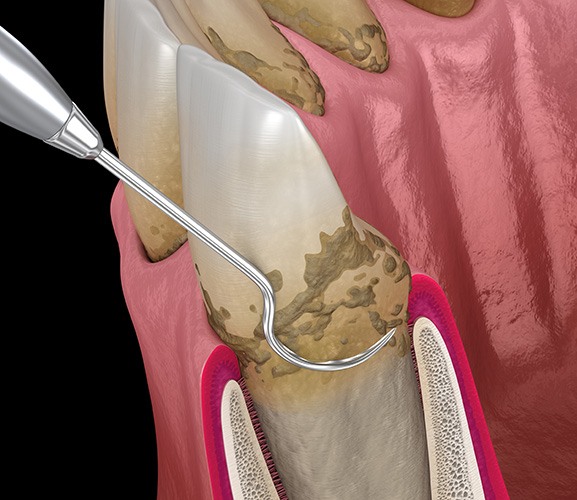
As the traditional gum disease treatment, scaling and root planing is a “deep cleaning” of a patient’s gums. The initial scaling removes hard plaque deposits from under and around your gums, using special instruments to do so. What follows is root planing – a process that smooths your tooth roots to reduce the risk of reinfection. Taken together, both phases of treatment can make gum tissues much healthier; they also become more effective when combined with other specialized options.

Not everyone displaying common gum disease symptoms needs a scaling and root planing treatment. If the disease hasn’t advanced below your gumline or created periodontal pockets (empty spaces between your gums and dental roots), it might be possible to treat your condition with increased hygiene efforts at home.
That said, it’s impossible to know for sure without an official oral exam. Rest assured, our team will take a careful, close look at your gums so we can help you choose the best treatment.

During a more routine dental cleaning, we remove plaque and tartar buildup from the surface of your teeth and the area just above your gumline. Under normal circumstances, this takes care of most harmful bacteria and protects your smile. In cases of advanced periodontitis, though, there’s often harder-to-reach bacteria deposits hidden below your gumline. This is when we’ll perform a scaling and use special tools to access and eliminate deeper bacteria.
Gum disease often causes recession, which can look like a shrinking gumline when the bacteria are closer to the surface. As the disease travels deeper into the gums, though, the tissue starts to pull away from your dental roots. This forms the periodontal pockets mentioned earlier, and they create the perfect safe-zone for future bacteria to collect and trigger reinfection. To help you maintain your restored oral health, we’ll perform a root planing and gently smooth out your gums, encouraging the tissue to reattach to your dental roots.

You’ll have to focus on two things after scaling and root planing: managing discomfort and keeping the bacteria content in your mouth low. We’ll give you more detailed and personalized instructions before you leave our office, but generally speaking, this will involve taking OTC pain relievers as necessary and keeping up with consistent hygiene habits.